Applications
The same membrane chemistry, specified five different ways depending on what the deck has to do.
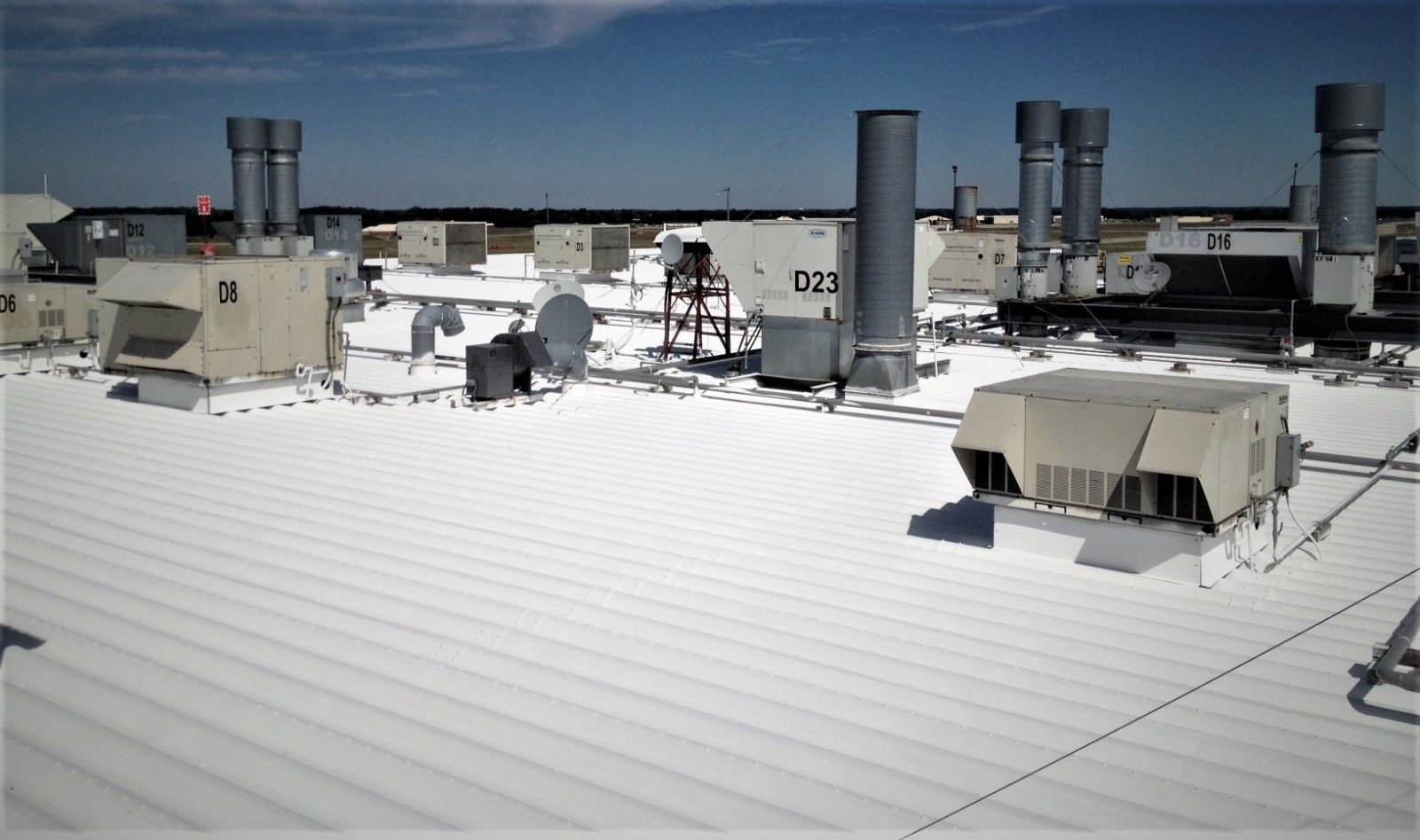
Corrugated Structural Roof Decking
A metal roof deck was never designed to be the waterproofing layer — it is structure, and whatever sits on top of it was supposed to keep the water out. When that assembly fails, the deck becomes the last line of defense, and it is the component least equipped to be one.
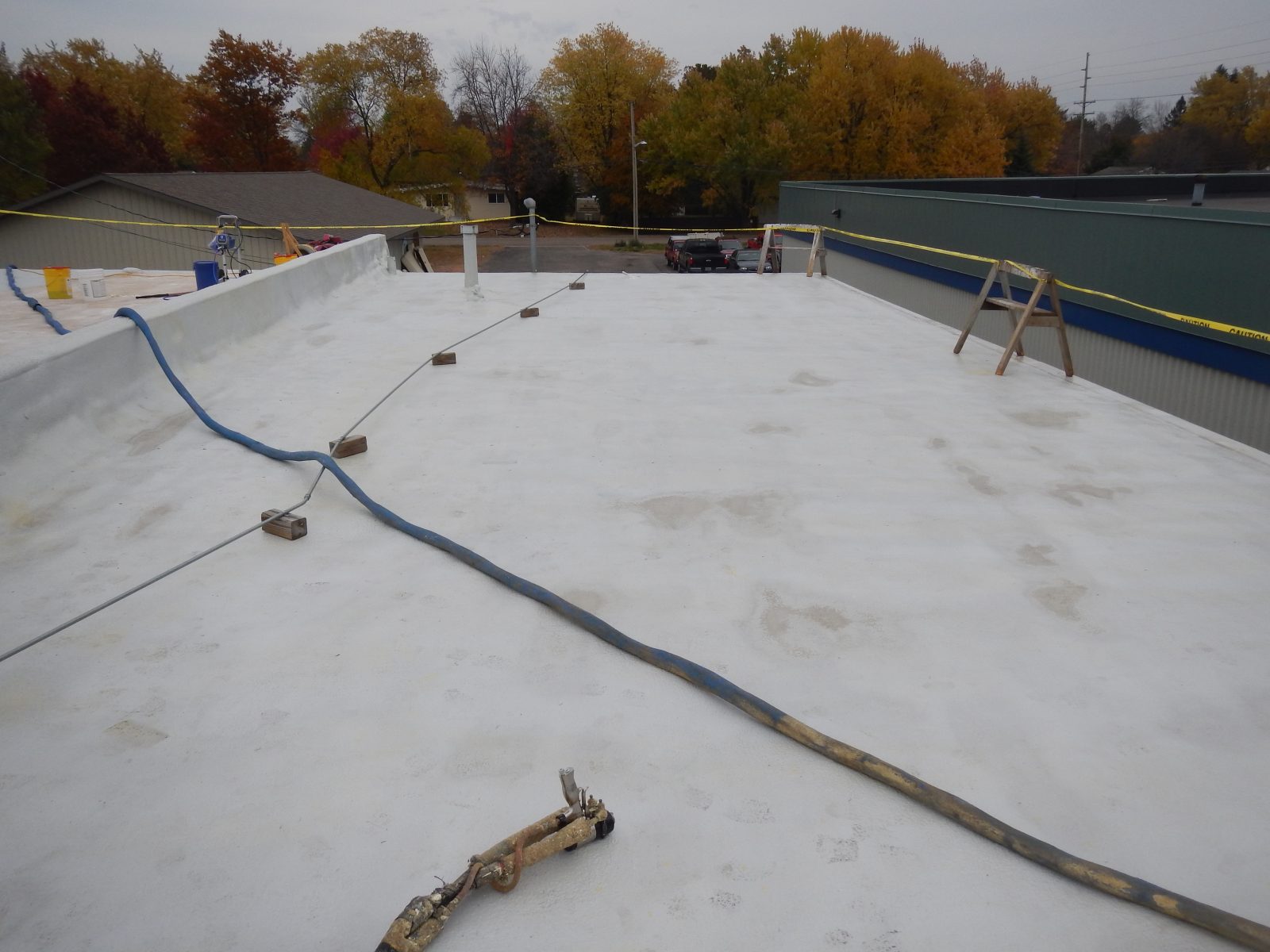
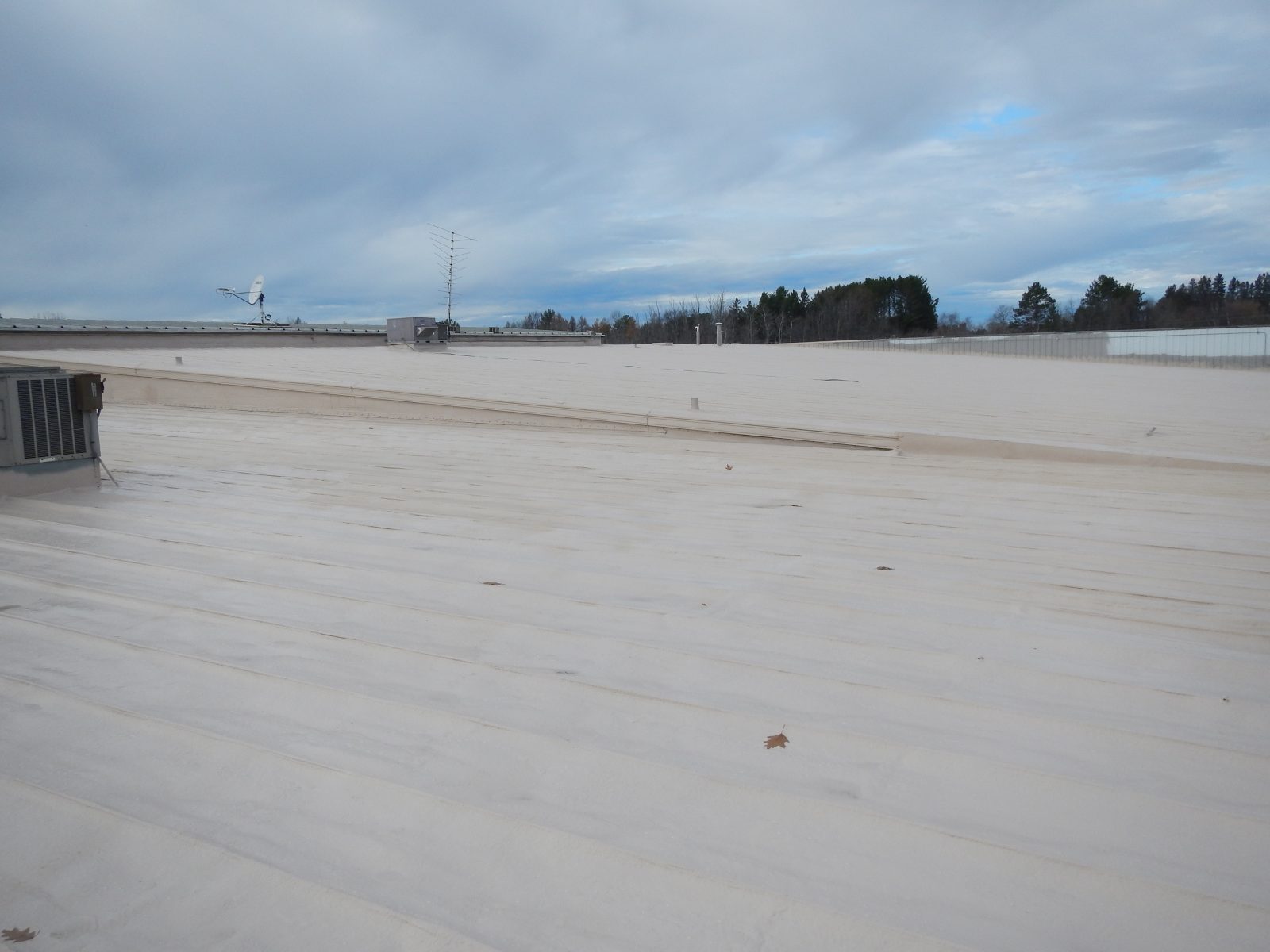
Sprayed directly to the deck, a polyurea membrane converts the structure into the waterproofing. Every side lap, end lap, and fastener penetration is bridged in the same pass as the field. That includes the ones you would never seal individually — a bay of B-deck can carry several hundred fastener heads.
Deflection is why elasticity matters here more than hardness. A roof deck moves under snow load, wind uplift, and thermal cycling. A membrane at 300–400% elongation follows that movement; a rigid film records it as a crack.
Spec: OR-80SLM at 60–80 mil over SP6-blasted deck, or over SP3-cleaned deck with 7001 Primer. 7001 Primer on all galvanized surfaces and at curb, wall, and perimeter terminations.
Mezzanines & Composite Floor Deck
Mezzanine decking lives between two worlds. Above it, cart traffic, pallet loads, dropped hardware, and occasional wash-down. Below it, the ceiling of an occupied space, where a leak is not a maintenance item but an incident.
Composite floor deck carries the added complication of the concrete topping interface. Where a topping is being replaced, coating the deck first gives you a waterproof plane under the new pour and protects the deck from the moisture in it. Where there is no topping and the deck plate is the walking surface, the coating has to be both membrane and floor.
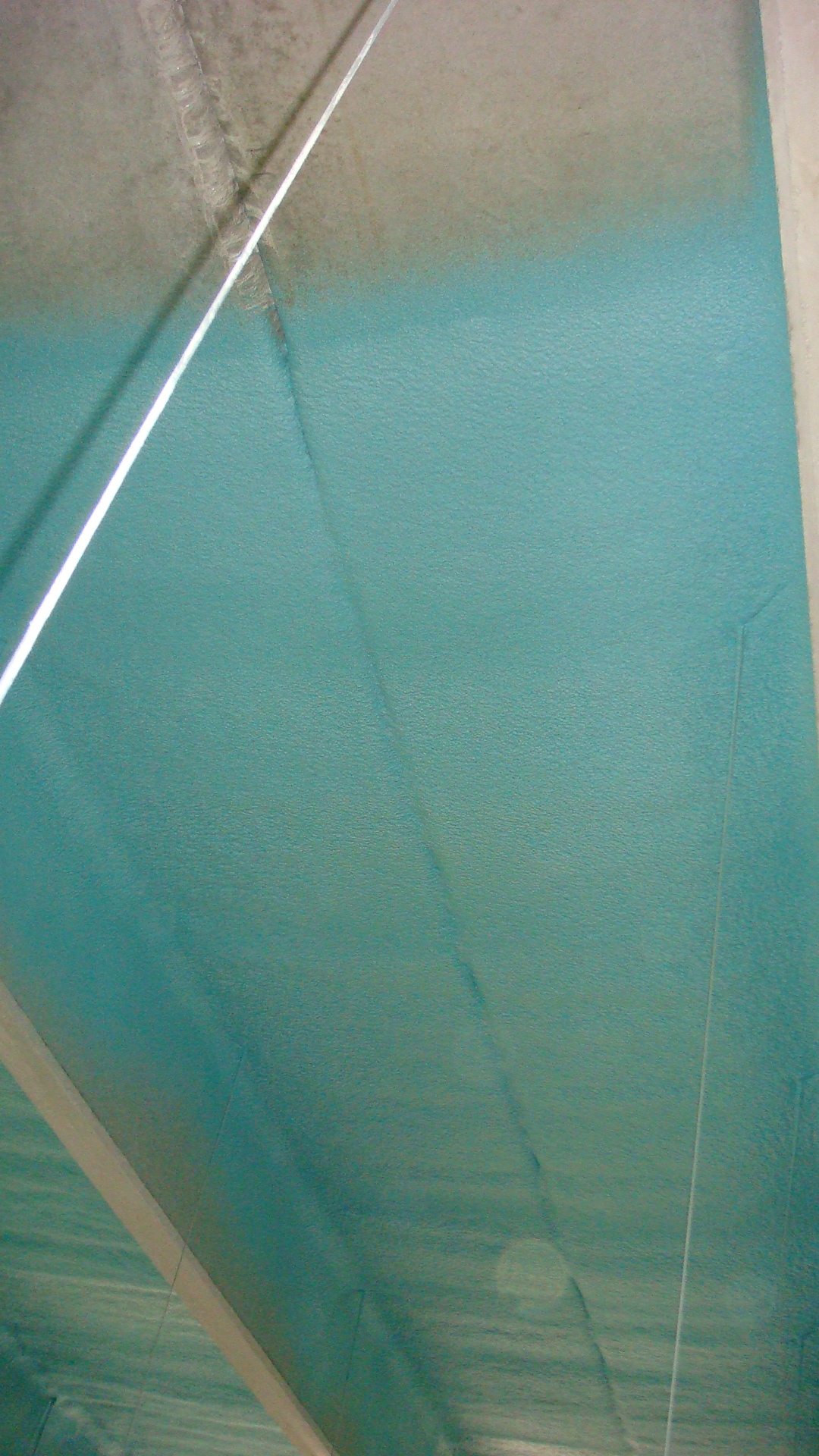
The underside deserves attention too. Condensation on the bottom flange of a deck over a humid or heated space is a slow, hidden corrosion driver, and coating the underside of the deck and its supporting bar joists addresses it directly.
Spec: OR7K at 40–60 mil for interior mezzanine and platform deck. Step up to FJ1 at 80–100 mil where the deck plate is the finished walking or working surface.
Catwalks, Walkways & Stair Treads
Elevated walking surfaces are where corrosion becomes a life-safety question rather than a maintenance one. A catwalk that has lost section thickness at the weld toes looks exactly like one that has not, right up until it does not.
These surfaces demand the full combination: waterproofing so water is not sitting on the plate, corrosion protection at every weld and connection, abrasion resistance because people and carts move across them daily, and slip resistance because they are elevated and often wet.
Aggregate broadcast into the wet polyurea produces a permanent non-slip texture that is part of the membrane rather than a tape or a paint applied over it — which matters because grip tape on a catwalk is a consumable that fails quietly.
Spec: FJ1 at 80–120 mil with aggregate broadcast on all walking surfaces, tread noses, and landings. OR7K at 40 mil on stringers, handrail bases, and supporting framing.
Marine & Industrial Platform Decking
Salt service is a different specification, and the difference is not the coating — it is the prep.
Chloride contamination on a marine deck is invisible, survives pressure washing that looks thorough, and will osmotically blister any membrane placed over it. Soluble salt testing to below 7 µg/cm² is a required step, not an optional one, and a failed test means wash and retest rather than press on and hope.
Dock decking, dredge and barge platforms, offshore and near-shore equipment decks, and coastal industrial walkways all take splash-zone or immersion exposure combined with constant traffic. That is the combination that eats conventional coatings — the flexible ones abrade through and the hard ones crack at the connections.
Spec: Chloride verification below 7 µg/cm², SSPC-SP6 blast to 2–4 mil profile, then OR-80SLM at 80 mil, or FJ1 at 100–120 mil with aggregate where the platform takes foot traffic.
Also Specified For
- Bar joists and underside deck framing — condensation-driven corrosion in wash-down, livestock, and high-humidity buildings
- Equipment and rooftop mechanical platforms — waterproofed and coated where units are anchored and serviced
- Grating infill and checker plate — sealed and given a permanent slip-resistant texture
- Canopy, awning, and covered walkway decks — exposed decking where the underside is the finished ceiling
- Deck-to-curb and deck-to-wall transitions — carried continuous with 7001 Primer across dissimilar substrates
- Trailer, container, and equipment decks — the same membrane, spec'd for impact with FJ1
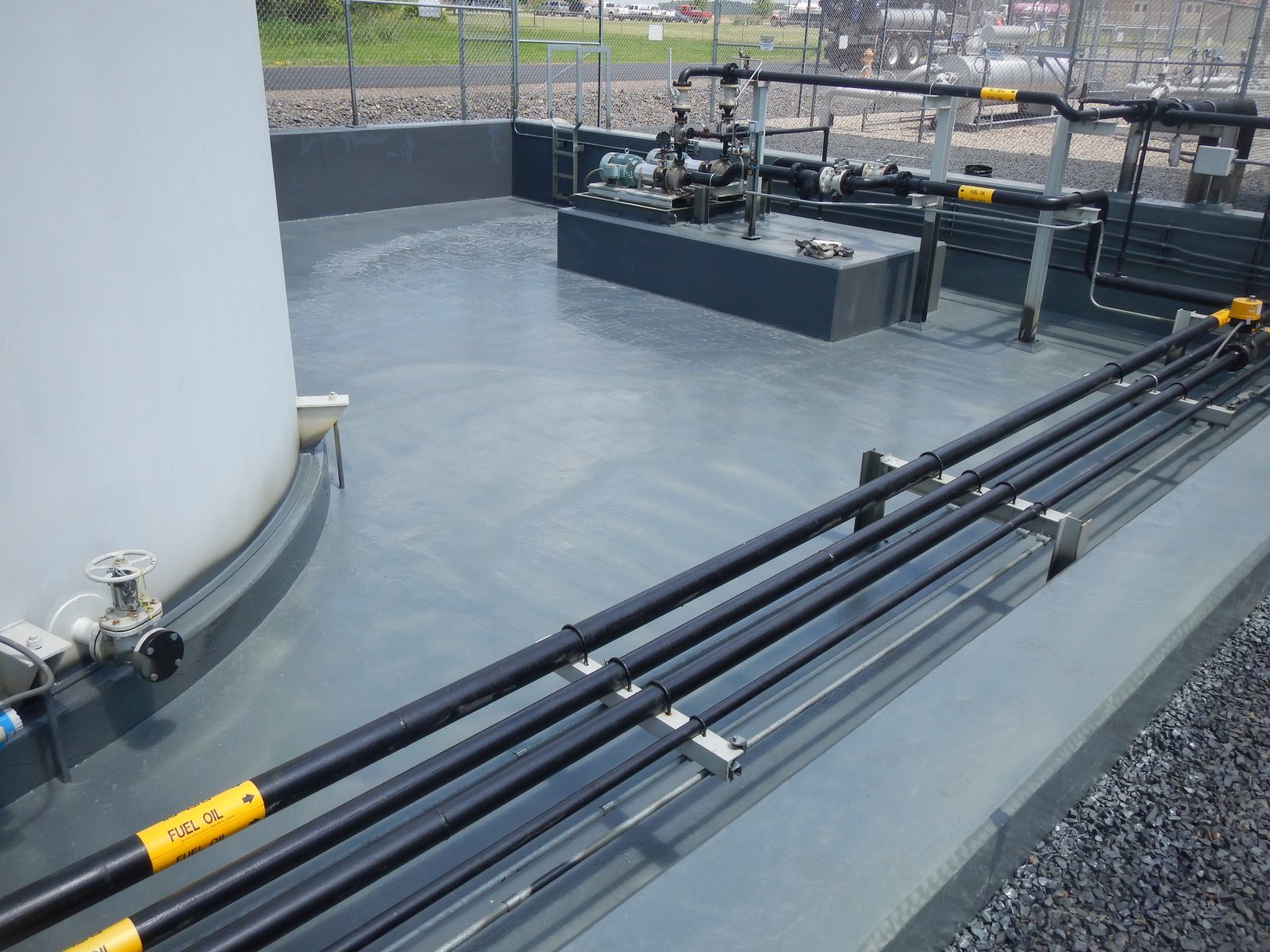
- Secondary containment on elevated decks — seamless, inspectable, chemically resistant
- Deck repairs and localized re-coats — polyurea bonds chemically to itself, so patches integrate rather than lap
Have a Deck Assembly Not Covered Here?
Send the deck profile, gauge, finish, and exposure. We will tell you which product, at what thickness, over what prep — or tell you honestly if this is not the right system for it.
Ask an ApplicatorGet a Deck Coating Spec
Tell us about your project and we will follow up with product details, technical data sheets, and pricing.